

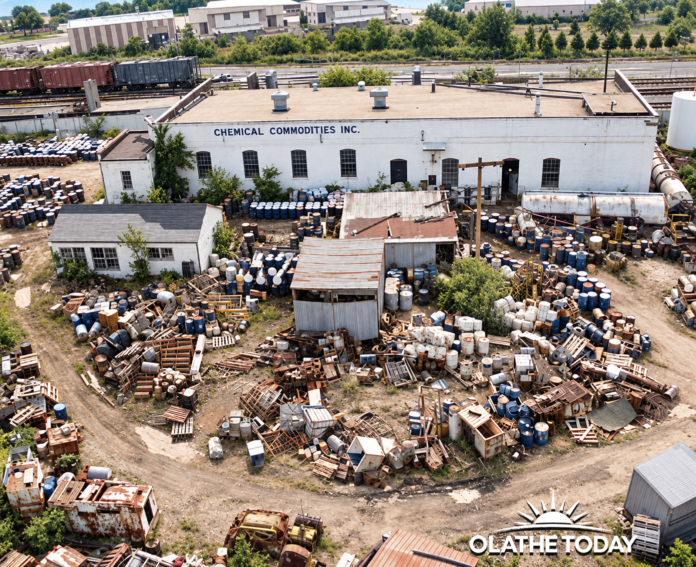
Decades of illegal chemical disposal, federal court battles and millions of dollars in cleanup efforts have failed to eliminate contamination beneath an Olathe neighborhood. Federal officials now say at least 22 homes require protection from potentially hazardous chemical vapors.
October 13, 2026
OLATHE, Kan. — More than 35 years after a federal investigation exposed illegal hazardous-waste disposal at an Olathe chemical company, the U.S. Environmental Protection Agency has determined that the cleanup of the former industrial property is not adequately protecting human health and the environment.
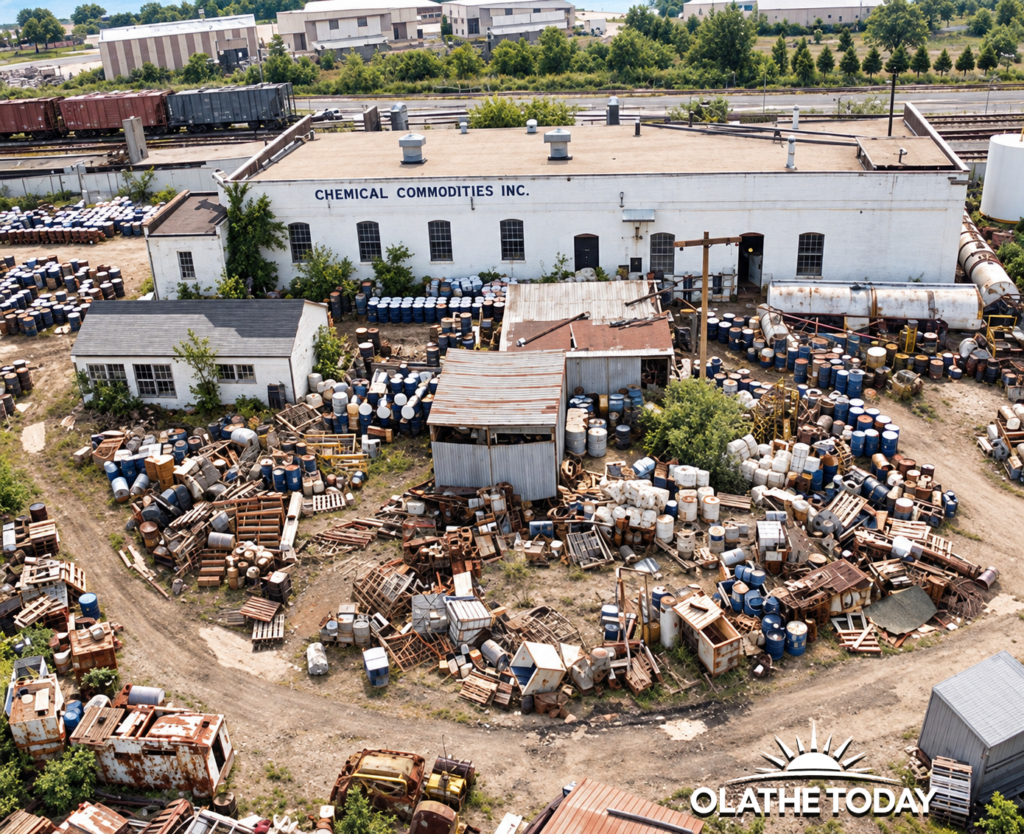
The finding involves the former Chemical Commodities Inc. facility at 320 S. Blake St., near Santa Fe Street and Interstate 35, where hazardous chemicals contaminated soil and groundwater during decades of industrial operations.
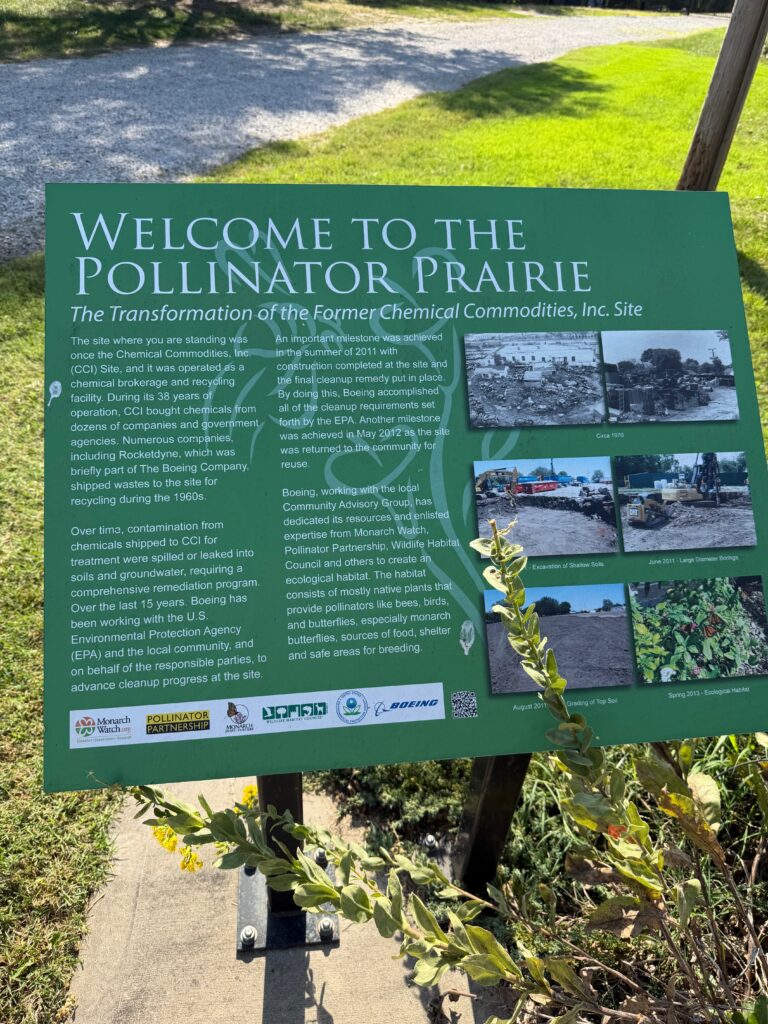
The property was eventually cleaned up at the surface and transformed into the Olathe Pollinator Prairie, an educational habitat for butterflies, bees and other pollinating insects.
But beneath the prairie and surrounding neighborhood, the environmental problems that began more than a generation ago remain unresolved.
The EPA’s latest five-year review, signed Sept. 24, 2026, concludes that existing cleanup measures are not sufficiently protecting nearby residents. Contaminated groundwater continues to pose concerns, and additional systems are needed to prevent chemical vapors from entering homes.
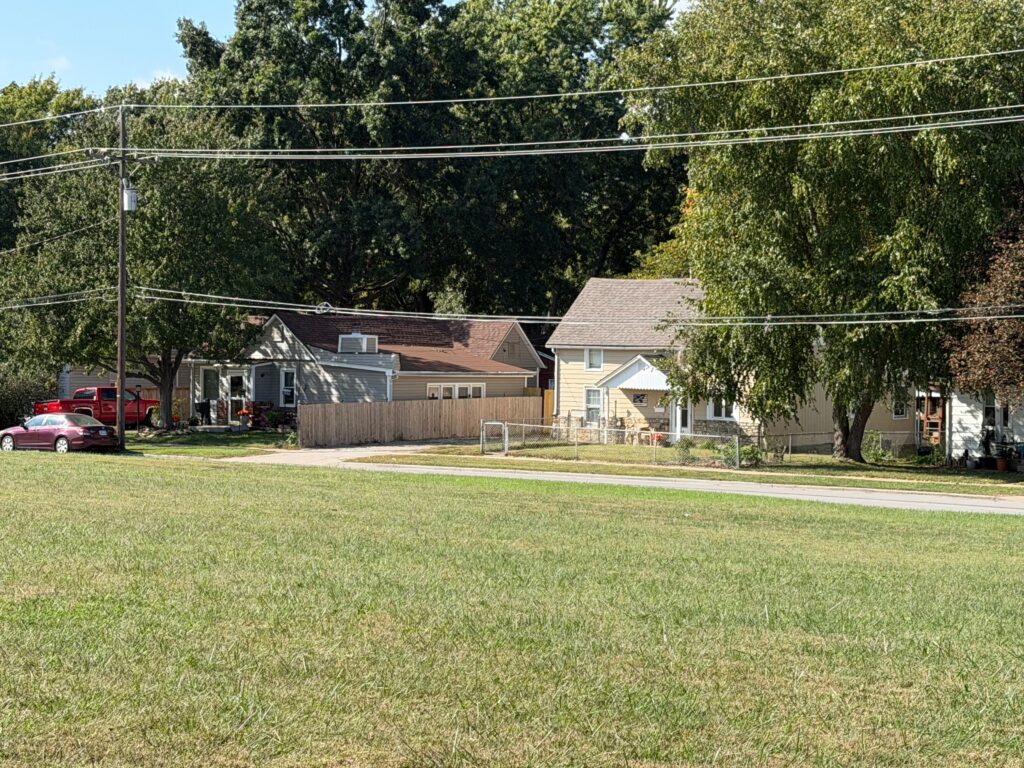
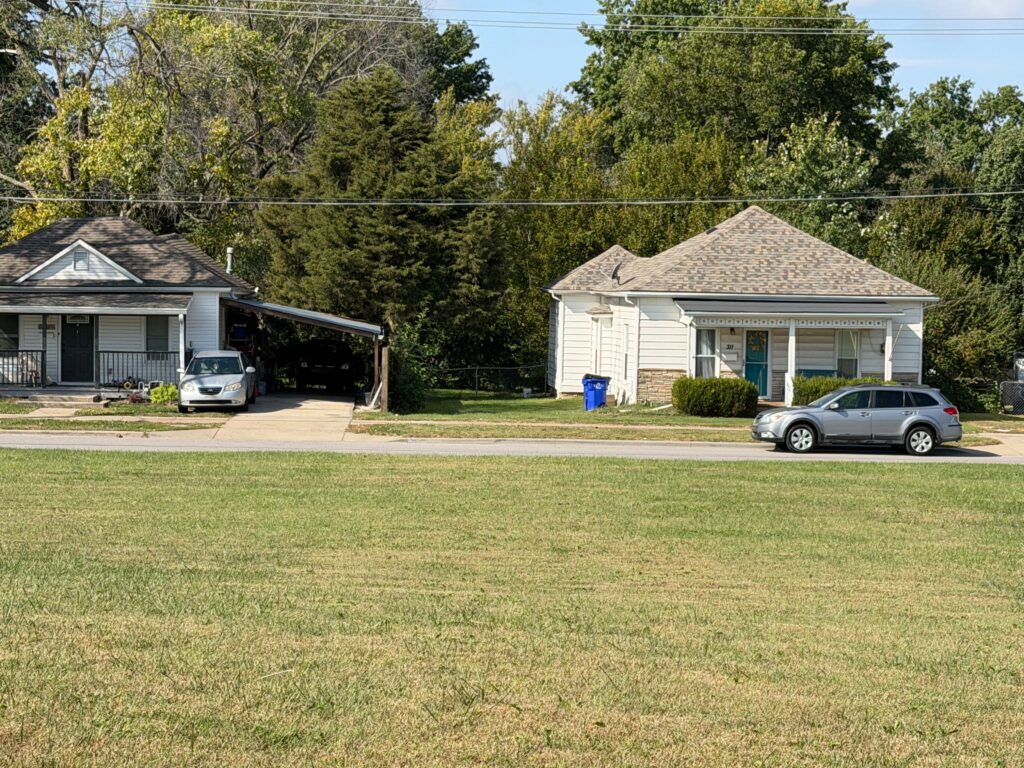
Federal testing has identified at least 22 nearby homes requiring vapor mitigation systems.
The findings represent another chapter in an environmental controversy that dates to the 1980s, when federal investigators, prosecutors and local residents began questioning how Chemical Commodities handled hazardous materials.
Historical newspaper reports from The Kansas City Star and The Kansas City Times reveal that many of the same concerns about underground contamination, cleanup effectiveness and government oversight were being raised more than three decades ago.
DECADES OF CHEMICAL HANDLING IN OLATHE
Chemical Commodities Inc. operated in Olathe from 1951 until 1989, handling and storing industrial chemicals, hazardous waste and surplus chemical products.
The company operated on approximately 1.5 acres in an area that included warehouses, storage tanks and containers holding a wide variety of chemical substances.
According to federal records, improper handling and disposal practices allowed hazardous materials to contaminate soil and groundwater.
Among the substances associated with the property were industrial solvents, pesticides, heavy metals and polychlorinated biphenyls, commonly known as PCBs.
Historical newspaper accounts describe a business that increasingly attracted attention from environmental regulators.
On March 22, 1989, Chemical Commodities had filed a federal complaint challenging EPA enforcement actions.
The company and its owner, Jerald Gershon, disputed the government’s handling of the case, arguing that federal actions had interfered with the company’s operations.
The dispute was part of a larger conflict over hazardous-waste disposal, storage practices and responsibility for cleaning up the property.
Federal officials were concerned that chemicals stored at the facility could threaten nearby residents and the environment.
COMPANY PLEADED GUILTY TO ILLEGAL HAZARDOUS-WASTE DISPOSAL
By 1990, the controversy had moved beyond environmental inspections and into federal criminal proceedings.
In January 1990, Chemical Commodities had pleaded guilty to a charge involving the illegal disposal of hazardous waste.
The case involved approximately 40,000 ampules containing hazardous pesticides, including methyl bromide, that company employees had been ordered to dispose of illegally.
The company faced substantial potential financial penalties under federal environmental laws.
The guilty plea was part of an agreement involving federal prosecutors and environmental regulators.
However, the legal proceedings did not end the dispute.
A June 28, 1990, Chemical Commodities was required to submit regular progress reports detailing its efforts to identify and dispose of hazardous materials.
The company was also under pressure to comply with federal cleanup requirements.
The newspaper reported that officials had grown concerned about the company’s progress and whether it was meeting the conditions imposed by the court.
The case demonstrated the difficulties federal authorities faced in forcing the business to address contamination while legal and financial disputes continued.
CLEANUP ESTIMATED AT $5 MILLION IN 1990
By October 1990, the cost of addressing the contamination had become a major issue.
An Oct. 12, 1990, Kansas City Star article carried the headline “Cleanup of site to cost $5 million.”
The report described a multistage cleanup effort at the Chemical Commodities property.
Federal officials were overseeing the removal and disposal of hazardous materials while preparing additional work involving contaminated soil and groundwater.
The newspaper reported that the cleanup was expected to cost approximately $5 million.
At the time, officials anticipated that portions of the work could take many months to complete.
The cleanup involved removing hazardous materials from the property and addressing contaminated soil.
Plans also called for an underground system intended to intercept contaminated groundwater and prevent pollutants from spreading farther into surrounding areas.
A diagram published by The Kansas City Star on March 22, 1991, showed proposed interceptor trenches near the former chemical facility.
The trenches were intended to collect contaminated groundwater so it could be treated or otherwise managed.
The proposal illustrates how early cleanup efforts focused on controlling the movement of chemicals beneath the property.
More than 35 years later, the EPA is still investigating groundwater contamination and determining whether additional measures are needed to protect nearby homes.
FEDERAL GOVERNMENT BARRED COMPANY FROM SELLING CHEMICALS
The company’s environmental problems also affected its ability to conduct business with the federal government.
On Oct. 21, 1990, The Kansas City Star reported that federal authorities had barred Chemical Commodities from selling surplus chemicals to government agencies.
The action followed findings involving the company’s handling and disposal of hazardous materials.
The newspaper reported that federal officials considered the company irresponsible because of its environmental violations.
Chemical Commodities had previously purchased surplus chemicals from federal agencies, including the Defense Department, and marketed some of those materials to other buyers.
The government’s action restricted the company’s ability to continue participating in those transactions.
The dispute was particularly significant because the company’s business model involved handling chemical products that could become hazardous waste if improperly stored or disposed of.
The federal restrictions added to the legal and financial pressures already facing the business.
JUDGE ORDERED $500,000 FINE IN 1991
The legal battle reached another milestone in August 1991.
On Aug. 15, The Kansas City Star reported that a federal judge had ordered Chemical Commodities to pay a $500,000 fine after determining that the company had failed to meet the conditions of its earlier criminal plea agreement.
The company had previously been fined $88,200 under the agreement.
Federal prosecutors argued that Chemical Commodities had not complied with its obligations involving hazardous-waste disposal and cleanup.
The newspaper reported that the judge imposed the larger penalty after reviewing the company’s conduct and the government’s allegations.
The fine underscored the seriousness of the violations and the federal government’s continuing efforts to hold the business accountable.
The historical reports also describe efforts to recover cleanup costs and resolve disputes over the company’s remaining assets.
For federal environmental officials, however, the immediate challenge remained the same: removing hazardous materials and preventing contamination from spreading beyond the original industrial property.
A SUPERFUND SITE WITH A LONG HISTORY
The EPA began major removal activities at the Chemical Commodities property in the early 1990s.
In 1994, the site was placed on the federal Superfund National Priorities List, which identifies some of the nation’s most seriously contaminated properties requiring long-term investigation and cleanup.
The Superfund program provides a framework for addressing hazardous waste that threatens human health or the environment.
At Chemical Commodities, cleanup efforts eventually included removing contaminated materials, installing a protective cap over portions of the property, addressing groundwater contamination and implementing systems designed to limit exposure.
Construction of the major cleanup systems was completed in 2012.
But completion of construction did not mean the contamination had been eliminated.
Hazardous substances remained underground, requiring continued monitoring and restrictions on how the property could be used.
The EPA conducts periodic reviews of Superfund sites where contamination remains at levels that prevent unrestricted use.
Those reviews are intended to determine whether the cleanup continues to protect people and the environment.
The latest review found that the existing measures are not adequately protective.
HOW CHEMICALS CAN ENTER NEARBY HOMES
One of the EPA’s principal concerns involves a process known as vapor intrusion.
Certain industrial chemicals evaporate readily, producing vapors that can move through soil and accumulate beneath buildings.
When groundwater contains these chemicals, vapors can travel upward through the ground and enter homes through foundation cracks, utility openings and other pathways.
Once inside, the chemicals can affect indoor air quality.
The potential health risks depend on the specific substances involved, their concentrations and the duration of exposure.
The EPA’s findings do not establish that every home near the former facility has unsafe indoor air or that residents have developed illnesses because of the contamination.
They do establish that additional protective measures are necessary.
Vapor mitigation systems can help prevent contaminated gases from entering buildings by collecting and venting them outdoors.
These systems often operate using principles similar to residential radon mitigation equipment.
However, protecting indoor air does not eliminate the underlying groundwater contamination.
The EPA continues to investigate how far the contamination has traveled and what additional cleanup work may be necessary.
AT LEAST 22 HOMES REQUIRE PROTECTION
Federal testing has identified at least 22 homes requiring vapor mitigation systems.
The EPA confirmed to the television station that it is expanding the number of systems installed in nearby residences.
The figure represents homes identified as needing protective equipment, not necessarily the total number of properties potentially affected by contamination.
Federal officials are continuing to investigate the boundaries of the contaminated groundwater plume.
A groundwater plume is an area of underground water containing pollutants that have migrated away from their original source.
Because groundwater moves through soil and rock, contamination can extend beyond the property where the original chemical releases occurred.
The EPA has been seeking permission from homeowners to conduct additional indoor-air testing.
In May 2025, the agency held a public meeting at the Olathe Indian Creek Library to explain the testing process and encourage residents within the assessment area to participate.
Federal officials said testing would be provided at no cost to homeowners.
Residents whose homes exceed applicable EPA action levels would also be offered mitigation systems at no cost.
The agency’s goal has been to evaluate homes within the designated vapor intrusion assessment area, although access requires permission from property owners.
RESIDENTS REMEMBER THE PROPERTY’S INDUSTRIAL PAST
For longtime residents, the latest findings have renewed concerns about contamination that has affected the neighborhood for generations.
In interviews with residents described memories of the former chemical operation and continuing uncertainty about the condition of the ground beneath their homes.
Greg Divine, who grew up in the neighborhood, recalled seeing unusually colored runoff near the facility following rainfall.
He said that although conditions have improved considerably since the chemical operation closed, he remains concerned about what is still underground.
Another resident, Julie Owens, said she purchased her home in 1995 and learned about the contamination shortly afterward.
Owens described receiving periodic communications from the EPA seeking permission to test the air inside her home.
Their experiences reflect the uncertainty that has surrounded the former industrial property for decades.
The EPA’s findings do not establish a connection between specific illnesses reported by residents and exposure to chemicals from the site. Determining whether an individual’s health condition resulted from environmental exposure requires separate medical and scientific evaluation.
FROM CONTAMINATED INDUSTRIAL PROPERTY TO POLLINATOR PRAIRIE
The former Chemical Commodities property has undergone a dramatic transformation since its industrial operations ended.
In 2012, the site was redeveloped into the Olathe Pollinator Prairie, a landscaped habitat intended to support butterflies, bees and other pollinating insects.
The project brought together federal environmental officials, organizations involved in the cleanup and community partners.
The prairie became an educational resource demonstrating how a contaminated industrial property could be reused while remaining subject to environmental restrictions.
Johnson County K-State Research and Extension Master Naturalists have been involved with the prairie and its educational activities.
The redevelopment has received recognition for combining environmental restoration, public education and habitat conservation.
However, the EPA’s latest findings underscore an important distinction between making the surface of a contaminated property suitable for a particular use and eliminating the underground contamination associated with its industrial history.
The protective cap and other measures were intended to limit exposure to contaminated materials at the property.
The current federal concerns primarily involve contaminated groundwater and the potential for chemical vapors to enter nearby buildings.
The EPA’s findings do not establish that visiting Pollinator Prairie is unsafe.
Rather, the new review focuses on whether the overall cleanup adequately protects people and the environment, particularly residents living above or near the contaminated groundwater plume.
EPA SAYS ADDITIONAL CLEANUP WORK IS NECESSARY
The EPA’s September 2026 determination represents a significant assessment of the cleanup’s effectiveness.
Federal Superfund law requires periodic reviews when hazardous substances remain at concentrations that prevent unrestricted use of a property.
These reviews examine whether cleanup measures continue to protect human health and the environment.
In the case of Chemical Commodities, the EPA concluded that the existing measures are not protective.
The agency is now working with parties potentially responsible for the contamination to determine how far the groundwater plume has traveled.
Federal officials say their next steps include continued vapor intrusion testing, inspections of existing mitigation equipment and installation of additional systems where needed.
KSHB 41 also reported that the EPA plans to seek additional monitoring wells and a feasibility study examining further cleanup options.
Monitoring wells allow environmental specialists to collect groundwater samples and track changes in contamination over time.
A feasibility study evaluates possible approaches to addressing contamination, including their effectiveness and practical limitations.
The EPA has not announced a final revised cleanup plan or a completion date for the additional work.
The agency also has not established when groundwater contamination will decline enough to eliminate the need for residential vapor mitigation systems.
That uncertainty is particularly significant because groundwater contamination can persist for decades, depending on the chemicals involved, underground conditions and the effectiveness of treatment methods.
OLATHE’S MUNICIPAL DRINKING WATER NOT AFFECTED
An important distinction for residents is that contamination beneath the former Chemical Commodities property does not mean Olathe’s municipal drinking water is contaminated.
The EPA confirmed that the city’s municipal drinking water supply is not affected by the site.
The principal concerns identified in the latest review involve contaminated groundwater beneath the neighborhood and the potential for chemical vapors to enter nearby buildings.
Residents should not assume that contamination of groundwater beneath a property means the water supplied through the city’s municipal system is unsafe.
The EPA’s continuing investigation is focused on identifying the extent of the contamination and preventing exposure.
PUBLIC MEETING PLANNED
The EPA announced Oct. 1 that it intends to hold another public meeting in Olathe to discuss the findings of its latest review and explain the next steps.
As of Oct. 13, the agency had not announced a meeting date.
The meeting is expected to provide residents an opportunity to learn more about the groundwater investigation, vapor intrusion testing and additional protective measures.
Homeowners who live near the former Chemical Commodities property can also contact the EPA directly about testing and the status of mitigation efforts.
The agency has said indoor-air testing and necessary mitigation systems are available without charge to eligible homeowners in the affected assessment area.
Residents can contact EPA Region 7 Community Involvement Coordinator Shaylee Borcsani at 913-551-7713 or borcsani.shaylee@epa.gov.
Additional information and cleanup documents are available through the EPA’s Chemical Commodities Superfund site records.
Documents may also be reviewed at the Olathe Indian Creek Library, 16100 W. 135th St.
The EPA’s findings leave several important questions unanswered, including how far the contamination has traveled, whether additional homes will require protection and what long-term cleanup measures will be necessary.
The historical newspaper accounts demonstrate that concerns about hazardous chemicals, groundwater contamination and the effectiveness of cleanup efforts are not new.
In 1990, federal officials were discussing a cleanup estimated to cost $5 million. In 1991, plans called for underground trenches to intercept contaminated groundwater.
Today, federal officials are still investigating contamination beneath the same Olathe neighborhood and determining what additional protections residents may need.
For nearby homeowners, the immediate concern is ensuring that existing and newly installed mitigation systems provide adequate protection while the EPA continues working to address the contamination.
More than three decades after the federal government began pursuing Chemical Commodities over illegal hazardous-waste disposal, the environmental consequences of the company’s operations remain an unresolved concern for Olathe.



 Something Different Media Group
