

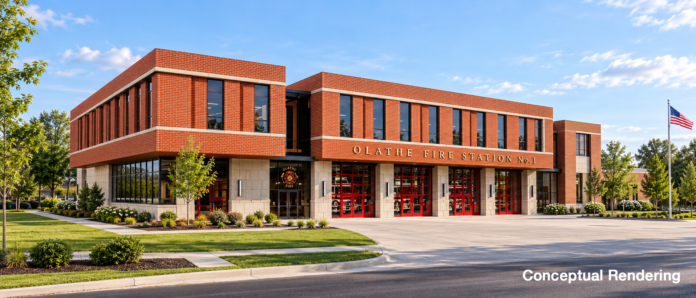
OLATHE, Kan. — The walls are shifting, cracks have opened between the floors and walls, and during winter, snow can find its way inside. In the summer, firefighters have relied on temporary air conditioning equipment in the hallway to help keep their aging workplace cool. Those are among the conditions inside Olathe Fire Station No. 1, where the city is preparing to spend more than $2.2 million on structural repairs while a long-planned replacement remains on hold.
The Olathe City Council voted 7-0 Tuesday, Oct. 20, to authorize $2.21 million for what the city is calling the Fire Station No. 1 Critical Remediation Project. The work is intended to address deteriorating conditions inside the 43-year-old station at 505 E. Old 56 Highway, part of Olathe’s Public Safety Campus. The repairs are expected to take place in 2027, but the project will not replace the aging building or eliminate the need for a new fire station.
During an unusually candid discussion about the building’s condition, Fire Chief Jeff DeGraffenreid described structural problems that have developed as the ground beneath the station has settled. Floors have shifted, cracks have appeared and concrete block walls have moved enough that portions have required attention to prevent falling material from becoming a safety hazard.
“We’re using a temporary air conditioner in the hallways and we’re on our second year,” DeGraffenreid told councilmembers while describing ongoing problems with the building’s heating and cooling system. He also explained that the movement of the concrete masonry walls has required removing a block to keep it from falling on someone.
The chief showed councilmembers photographs of the deterioration, including a gap where the floor has separated from a wall.
“That’s where the snow comes in,” DeGraffenreid said.
The conditions go beyond cosmetic damage. According to city documents, cracks in the concrete foundation have created uneven walking surfaces and significant differences in floor height. In the bunk rooms, the walls have become separated from the floor slab, leaving the space out of compliance with accessibility standards. Cracks in the protective floor coating of the locker room and restroom could also allow moisture to enter, creating conditions where mold could develop.
City officials say the repairs will address the foundation, level affected floors and restore portions of the bunk rooms and locker rooms. Some walls, doors and interior finishes may also need to be repaired or replaced as part of the structural work. The funding will come from general obligation bonds included in the city’s 2027-2031 Capital Improvement Plan.
DeGraffenreid emphasized that this is not the type of renovation intended to modernize a building or provide new amenities. The city is addressing basic structural problems so the station can remain in service until Olathe can afford to replace it.
The situation is particularly important because Fire Station No. 1 is not a lightly used facility. Ten firefighters work 24-hour shifts at the station, which also houses the department’s special operations personnel and equipment. Although the building sits near the city’s police headquarters, its response area stretches well into southern Olathe, including areas near 175th Street and Interstate 35.
The station has also become increasingly cramped for modern firefighting operations. DeGraffenreid told the council that fire apparatus have grown larger since the building opened in 1983, while the department’s staffing and equipment needs have changed. Fire trucks cannot always be parked in the most practical positions because space must also be found for boats and other specialized equipment.
Those operational limitations are another reason the chief says structural repairs cannot be considered a permanent solution.
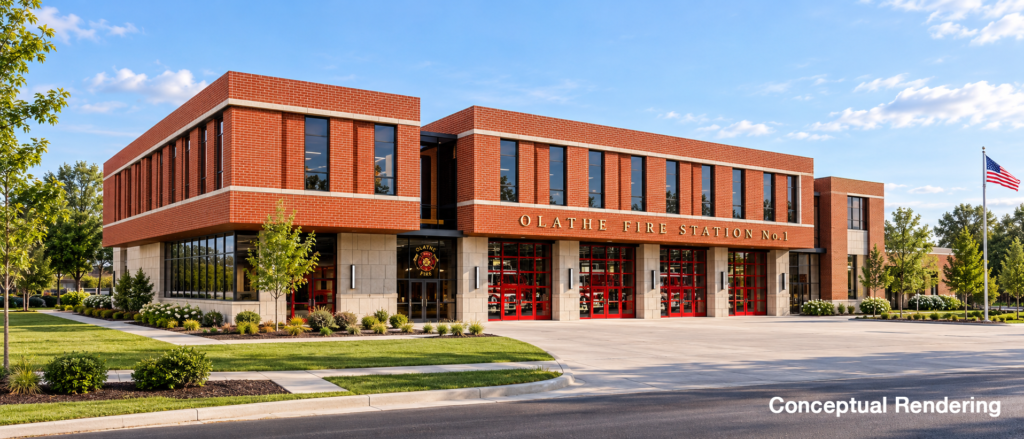
The replacement of Fire Station No. 1 has actually been in the works for several years. In November 2023, the City Council authorized the initial planning and design of a new station as part of a project then estimated at $20 million. The plan called for constructing a new, larger dual-company station on city-owned land at the south end of the Public Safety Campus, where the existing animal shelter is located.
At the time, the city anticipated moving through design and beginning construction within the next several years. But the project became entangled in Olathe’s changing capital improvement priorities, including the planned relocation of the animal shelter and mounting budget constraints. By 2025, the city had removed the Fire Station No. 1 replacement from its funded capital improvement schedule, shifting attention and a portion of the available resources toward replacing Fire Station No. 4 near Santa Fe and Mur-Len Road.
The Fire Station No. 4 replacement is moving forward under a separate $16.5 million project. Meanwhile, the firefighters at Station No. 1 continue working in a building the city has already determined is near the end of its useful life.
DeGraffenreid said two studies of the station have confirmed the need for replacement. Even if a new station were funded immediately, he explained, the existing building would still have to remain operational during the time required to construct its replacement. That is why he believes the $2.21 million repair project is necessary regardless of when the city eventually proceeds with a new facility.
The discussion prompted unusually pointed comments from members of the City Council.
“I think it’s embarrassing that we’ve allowed Fire Station 1 to get to this condition,” Councilmember Matt Schoonover said, praising the firefighters for continuing to work under difficult circumstances while questioning why the city had not been able to address the building’s long-term needs.
Schoonover asked how much additional life the $2.21 million investment would actually provide. DeGraffenreid acknowledged that he could not yet give a definite answer because engineers and construction specialists still need to determine the detailed scope of work. He indicated that the repairs should provide more than a short-term fix, but not the decades of additional service that would justify abandoning plans for replacement.
Other councilmembers expressed concern about the working conditions and the effect on fire protection in southern Olathe.
Councilmember LeEtta Felter asked whether the temporary air conditioning equipment positioned in the hallway interferes with firefighters responding to emergencies. DeGraffenreid said he would not characterize it as slowing response times, but acknowledged that the equipment struggles to keep the building comfortable during Kansas summers.
The chief also told the council that keeping the station operational during repairs will require careful planning. Firefighters cannot simply abandon the building while construction is underway, and the current $2.21 million project does not include a temporary fire station or trailer facility. How crews and equipment will be accommodated during the work remains to be determined.
The discussion also highlighted another challenge facing Olathe as development continues moving south. The city has plans for a future Fire Station No. 10 near 171st Street and Lone Elm Road, which would improve coverage along the rapidly developing 175th Street corridor. That station, however, is not currently funded.
Councilmembers discussed whether Johnson County and neighboring communities such as Gardner and Spring Hill might eventually help finance the southern station because their residents and businesses also benefit from regional fire protection agreements. A dedicated public safety sales tax was also mentioned as one possible future way to fund major facilities. Neither proposal was approved Tuesday.
The broader financial challenge is substantial. During the discussion, a councilmember estimated that the city faces approximately $100 million in additional needs involving fire stations and a replacement Public Works garage, projects for which Olathe does not currently have sufficient funding.
Not everyone on the council agreed that the condition of Station No. 1 reflected a failure to invest in public safety. Other remarks pointed to the construction of new fire stations, improvements to existing stations and a new fire training facility in recent years. The city has opened newer stations to meet growth and is proceeding with the replacement of Station No. 4.
Still, there was agreement that Fire Station No. 1 needs attention now, even if its eventual replacement must wait.
For the firefighters assigned there, the upcoming project should mean more stable floors, repaired walls and safer living and working conditions. For residents, it is intended to keep an important fire station operating while Olathe works through its increasingly expensive list of public safety and infrastructure projects.
What the $2.21 million cannot provide is a new building, additional space for modern firefighting equipment or a firm date for replacing a station that opened more than four decades ago.
That decision remains for a future City Council budget.



 Something Different Media Group
