

The Johnson County Sheriff’s Office wants to expand its use of drones, remote cameras and artificial intelligence through a proposed $11.45 million technology contract that would also maintain its existing body-camera and TASER programs.
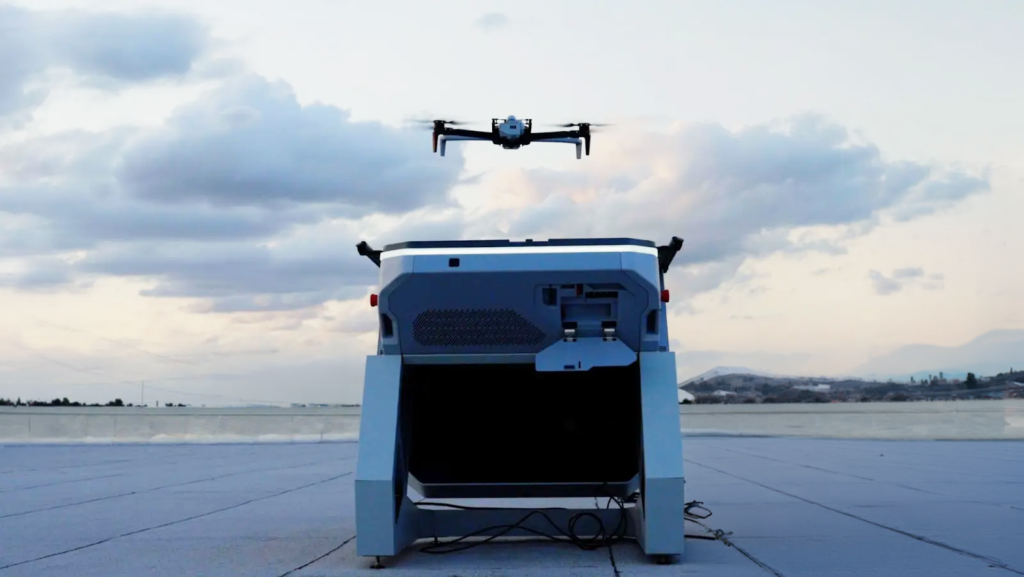
The seven-year agreement with Axon Enterprise would add four dock-based drone-response packages, 10 solar-powered remote camera systems, AI tools for 250 camera feeds and the ability to livestream body-camera video.
The proposal also includes virtual-reality training equipment and a new records-management system. Building and implementing that records system would require approximately $1.5 million more through a separate capital request planned for 2028, according to the sheriff’s briefing.
Sheriff Byron Roberson submitted the contract replacement request for the Board of County Commissioners’ Nov. 12 agenda. It would end an existing Axon agreement scheduled to run through February 2029 and replace it with a package covering February 2027 through January 2034.
The request totals $11,449,406.90. It includes equipment and ongoing software, storage, support and replacement costs over seven years, according to the county.
The proposed drone equipment includes four dock-based “Drone as First Responder” packages intended to provide a rapid aerial response to emergency scenes. Two patrol drone packages and two R10 team drone kits are also included.
Drone-detection equipment would use radar and radio-frequency technology to detect drones. Separately, 10 Axon Outpost remote camera systems would come with solar equipment, installation, maintenance and replacements.
The briefing does not identify where the drone docks or remote cameras would be installed or provide deployment dates.
The AI portion includes Axon AI Era licenses and 250 Fusus CCTV AI streams for a Real-Time Intelligence Center, along with body-camera livestreaming, Community Link and vehicle-intelligence licenses. The 250 streams are software capacity for camera feeds, not a stated purchase of 250 new cameras.
The proposed records-management system would connect reports, digital evidence and audit trails, allowing investigators to assemble case materials for prosecutors and see links among people, vehicles and incidents across cases.
The sheriff’s briefing says multiple agencies would use the permission-based system, but it does not identify the participating agencies. Some ongoing licensing is included in the seven-year contract. The approximately $1.5 million needed for the initial build and implementation would be sought separately in the 2028 capital improvement process.
Much of the contract would continue equipment and services already in use.
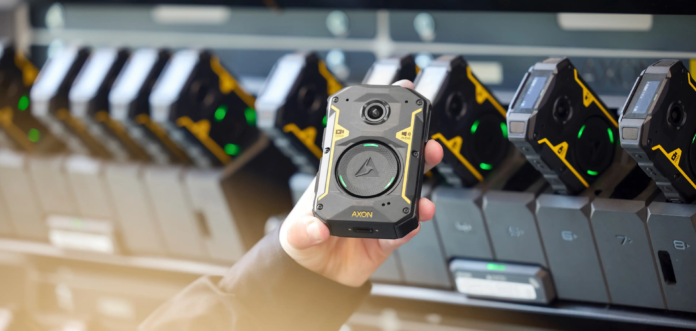
The sheriff’s office would retain 563 body-worn cameras, three interview-room camera systems and its 283-user TASER 10 program. Vehicle-camera coverage would increase from 105 to 108 vehicles, while basic digital-evidence licenses would rise from 429 to 480.
The package includes Axon Body 4 hardware and scheduled replacements, as well as replacement fleet-camera and TASER equipment in 2029. Unlimited digital-evidence storage would continue.
For training, the proposal adds 13 virtual-reality kits with headsets, controllers and tablets, plus 283 training plans for firearm and TASER scenarios.
The sheriff’s office says the additional annual funding needed for the contract was included in the 2027 budget. That increase is $499,105 above the $1,140,182.87 already budgeted annually for the current agreement.
Payments under the proposed contract would be approximately $1.616 million in 2027 and $1.639 million annually from 2028 through 2033.
Although the briefing states that no additional funding is being requested with the contract action, the proposed agreement would increase annual costs. The additional budget authority was approved earlier in the budget process.
Roberson’s briefing argues that replacing the existing agreement early would lock in 2026 pricing and avoid approximately $1.66 million in price increases compared with 2028 pricing. It also cites approximately $9.2 million in bundled savings. Those figures are the sheriff’s office’s estimates of pricing benefits, not reductions in the county’s current annual spending.
The purchase would use a cooperative procurement agreement available through the state. County purchasing staff said that approach meets county purchasing requirements. The draft agreement includes provisions addressing control of the data collected through the systems.
Recordings, reports, evidence, metadata and investigative materials classified as agency content would remain the exclusive property of the sheriff’s office. Axon could not use that content for product development without express written consent, although the company could access it as permitted under the agreement to support, secure and troubleshoot its services.
The contract also provides a 90-day period after termination during which the sheriff’s office could download agency content without an additional fee. Those provisions address vendor handling of records; the briefing does not detail the sheriff’s operational rules for drone deployment, AI use or access to live camera feeds.
The board was asked to choose whether to replace the current contract. Alternatives identified by staff included retaining the existing agreement through February 2029 or seeking a smaller package that preserves core services while excluding some or all of the new technology.


 Something Different Media Group
