

Vehicle orders dating as far back as 2022 are catching up with Olathe’s budget, prompting a request to raise the city’s 2026 fleet spending limit by $9.2 million.
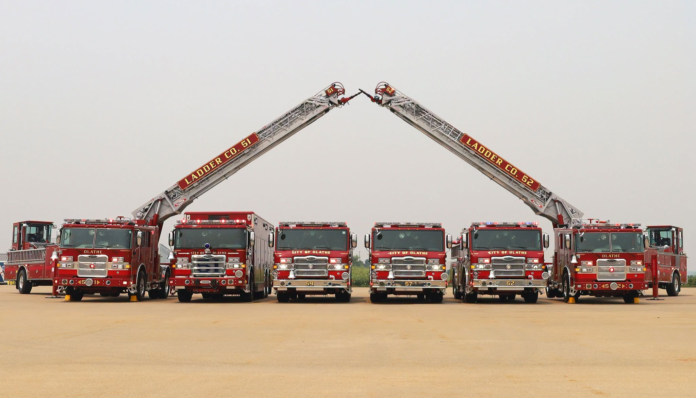
The delayed purchases include nearly $5.2 million for five fire vehicles. City staff say the purchases were approved and money was set aside in earlier years, but delivery delays pushed the bills into 2026.
The request drew questions from Mayor John Bacon on Nov. 3, particularly about a projection showing just $10,837 remaining in the vehicle replacement fund if every authorized purchase is paid this year.
“And it looks like our cash reserve at the end of this will be like 11 grand,” Bacon said.
Staff acknowledged that the projection allows for that outcome, but said it is unlikely all the outstanding vehicles will arrive before year’s end. They described the amendment as a way to give the city enough spending authority to pay for purchases already planned.
The proposal would increase the Vehicle and Equipment Replacement Fund’s legal budget authority from $12,950,236 to $22,166,989 — an increase of $9,216,753. No amendment was approved Nov. 3. A public hearing is scheduled for Nov. 17, with adoption proposed for Dec. 1.
The problem began with assumptions about when orders would arrive.
Budget Manager Clara Bernauer said the city built its 2026 budget expecting vehicles ordered in 2022, 2023 and 2024 to have been delivered and paid for by the end of 2025. Some of those purchases instead carried into this year.
The city’s written report identifies approximately $8.9 million in 2026 vehicle purchases tied to older purchase orders, including the five fire vehicles.
Bernauer said the invoices discussed were coming in at the amounts in the original contracts. The issue driving the amendment was when the purchases were completed.
“It really just was timing,” she said.
Councilmember Creighton sought to emphasize that the money had already been reserved for the purchases.
“We already had the money set aside,” he said, drawing agreement from Bernauer.
The draft budget helps explain why staff distinguish the spending limit from the money available to pay the bills. It revises the fund’s beginning-of-year unencumbered cash balance from about $2.86 million to $11.41 million. Purchases expected to consume money in 2025 had remained unpaid, leaving more money to carry into 2026.
The amended projection shows $22,177,826 available and $22,166,989 in expenditures, leaving the $10,837 balance that concerned Bacon.
That figure applies to the vehicle replacement fund. Other city funds carry separate reserves, and staff said those resources could assist with an emergency purchase if necessary.
Assistant City Manager Jamie Robichaud said the city routinely budgets its internal service funds to use the resources assigned to planned purchases. She said staff also review a five-year forecast to assess future vehicle needs.
“Highly unlikely it actually goes down to $10,837,” Robichaud said.
The replacement fund works by paying for vehicles upfront, then collecting internal lease charges from the city departments that use them. Those payments spread replacement costs over time and replenish the fund for future purchases.
Councilmember Matthew Schoonover asked how quickly the money would build back up if the balance fell that low.
Bernauer said charges for services would replenish the fund by more than $10 million in 2027, with additional revenue possible from vehicle disposals and investment earnings. Staff said lease fees were increased in the 2027 budget to strengthen the fund over time.
Bacon also asked what accounted for roughly $4 million beyond the fire vehicles. The written report identifies the fire purchases but does not provide a vehicle-by-vehicle breakdown of the remaining purchases.
Residents will have an opportunity to address the proposed amendment at the Nov. 17 public hearing. Staff recommend returning to the council for adoption Dec. 1.


 Something Different Media Group
